What Bitcoin Mining Management Software Actually Does (And Why the Feature List Won't Tell You)
Bitcoin mining management platforms all claim to do the same things. Here's what they actually share, where they diverge, and why comparing feature lists is the wrong way to choose.
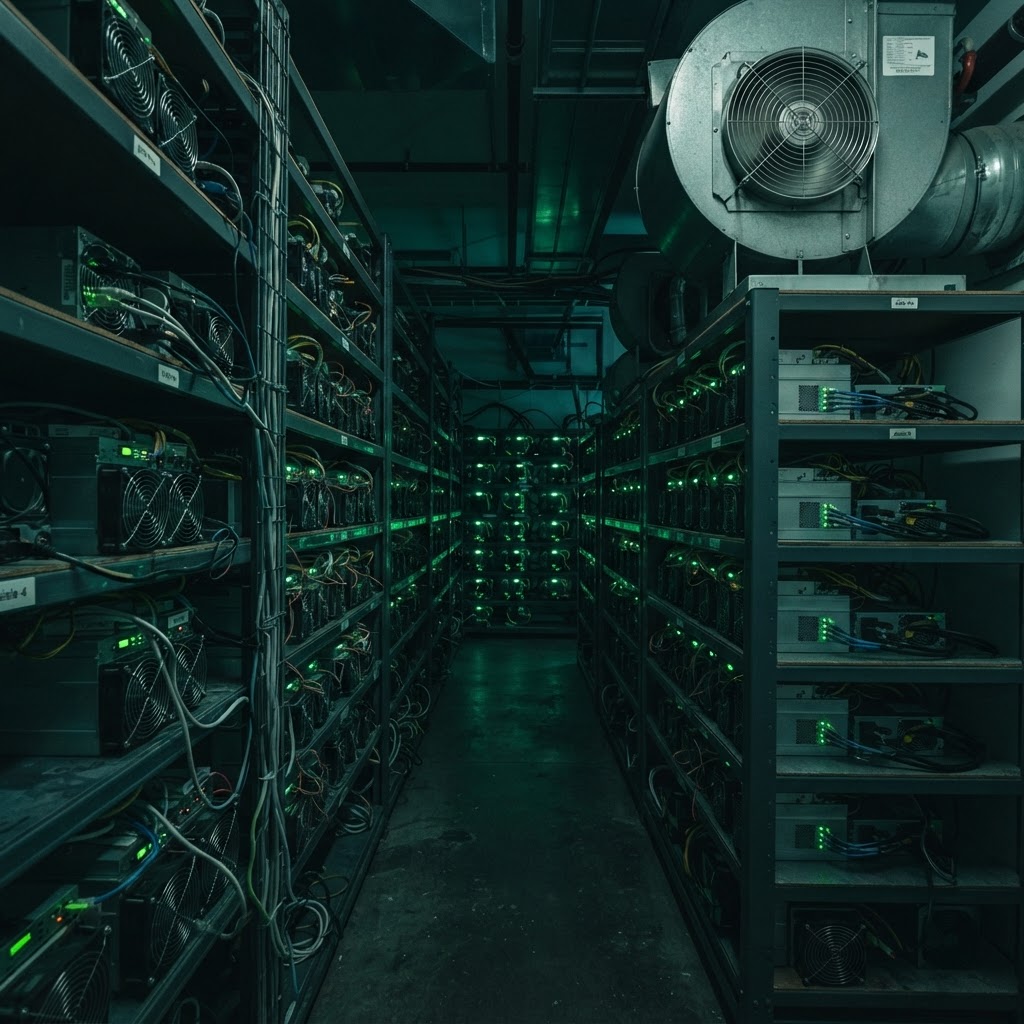
Every Bitcoin mining platform claims to be different. In reality, they all do the same core job: fleet visibility and remote control, meaning uptime, hashrate, temperatures, and the ability to act on your ASICs without a technician standing at the rack. That's the floor, not the ceiling.
If you've searched "best mining management software" or "what does mining management software actually do," here's the honest breakdown of what's shared, where platforms actually diverge, and why the feature list on a pricing page won't tell you which one is right for your site.
TL;DR: Every platform in this category shares the same foundation, ASIC monitoring and remote control. They diverge in scope: how deep the energy strategy goes, whether "automation" means scheduled actions or real-time conditional triggers, and whether inventory and reporting are full operational systems or just a dashboard. The same feature name (power management, curtailment, demand response) often hides very different capability across LoD, Braiins, Luxor, and OBM. Compare depth and openness, not the length of the feature list.
Why do "power control," "curtailment," and "demand response" mean the same thing?
Here's the trap. Several platforms now use different names for the same underlying action. "Power control," "curtailment," and "demand response signaling" often describe the exact same thing: turning load down when the grid needs it, or when it's no longer profitable to keep running.
If you're comparing feature lists side by side, this matters. A platform that lists "power management" and one that lists "demand response integration" might be doing the same job with a different label. Or one of them might not be doing the job at all. The label isn't the differentiator. What's underneath it is.
Same feature name, different capability
This is the part vendors don't put on their pricing pages. Here's where "the same feature" actually diverges once you're running it.
Automation. Some platforms only support scheduled actions. Others support real-time triggers, recurring workflows, and conditional logic based on miner health, temperature, or energy prices. Ask a vendor: does it react to live events? Combine multiple conditions? Act differently by site?
Inventory. For some platforms, inventory is a list of miners. For others, it's a full system of record: procurement tracking, deployment history, rack assignment, maintenance records, lifecycle management. The real question is whether it becomes an operational system of record or stays a spreadsheet with a UI.
Power management. Nearly every platform advertises this. Some stop at manual controls, rebooting miners, and firmware profiles. Others automate using live electricity prices, demand response events, and market signals. That gap is the difference between monitoring energy and actually managing it.
Reporting. Ask what's actually included: operational KPIs, financial performance, energy consumption, hosting billing, historical trends, exportable dashboards. It ranges from a few charts to a full analytics platform, and the range is wide.
Site visualization. Some sitemaps show rack locations, full stop. Others overlay hashrate, temperatures, airflow, power consumption, and fault status, which lets you catch a spatial problem before it becomes downtime.
AI and optimization. This term gets used loosely right now. It can mean recommending actions, changing miner profiles, optimizing on profitability, responding to market prices, or running site-wide energy strategies. The decision logic behind it matters more than the label on top of it.
Which platforms should you actually compare?
If you're evaluating this category, four names show up in almost every search: LoD, Braiins, Luxor, and Foreman, which is rebranding to OBM. At a glance:
| Attribute | LoD | Braiins | Luxor | OBM (Foreman) |
|---|---|---|---|---|
| Founded | 2021 | 2011 | 2017 | 2017 |
| Headquarters | Vancouver, Canada | Prague, Czech Republic | Seattle, US | Baltimore, US |
| Core market | Flexible data centers, Bitcoin mining, AI, HPC | Bitcoin mining operations | Bitcoin mining, hashrate financial markets, energy retail | Bitcoin mining, expanding into flexible load management |
| Platform type | Energy-integrated mine management (ASICs, GPU, sensors) | Mine management, firmware | Mine management: pool, firmware, derivatives, hardware, energy | Mine management |
As of July 2026.
Each one picked a different bet on where the value sits. Braiins went deep on firmware and per-chip tuning. Luxor went wide into pool, hardware financing, and energy retail. OBM built out flexible load management on top of a proprietary base. LoD built energy into the core of the platform instead of adding it on later.
The one thing to remember
The best platform isn't the one with the longest feature list. It's the one whose capabilities actually match your site's operational challenges, not what looks good on a pricing page.
Before you sign anything, ask a vendor to demonstrate how one specific workflow, a curtailment event, a firmware push, a maintenance ticket, actually runs in a live environment. Not what's promised. What happens.
Next step
We wrote a full field guide comparing LoD, Braiins, Luxor, and Foreman feature by feature, including where LoD is not the right fit for your site.
Download the full comparison guide
Or if you'd rather skip straight to a straight answer, book a 30-minute call and we'll tell you honestly whether any of these four platforms actually solve your problem.