The Grid Is Ready to Allocate More MW for AI. The Problem Is Getting a Reliable, Flexible Solution.
Stopping AI for 40 hours a year can cost a 100 MW data center $11 million to $74 million, depending on the workload. LōD, Camus Energy and Compute Heat Rate say the answer is matching the method to the workload, including shifting AI inference between sites.
> TL;DR: The U.S. grid could absorb 76–126 GW of new load if data centers commit to flexibility for a few dozen hours a year. At AI Infra Summit, LōD, Camus Energy and Compute Heat Rate presented a framework: match each flexibility method to the workload. Training can pause or defer; high-value AI inference should keep running and be shifted across distributed sites based on SLA health and grid conditions. LōD will pilot grid-responsive inference balancing with Dominion Energy in Ashland, Virginia this fall.
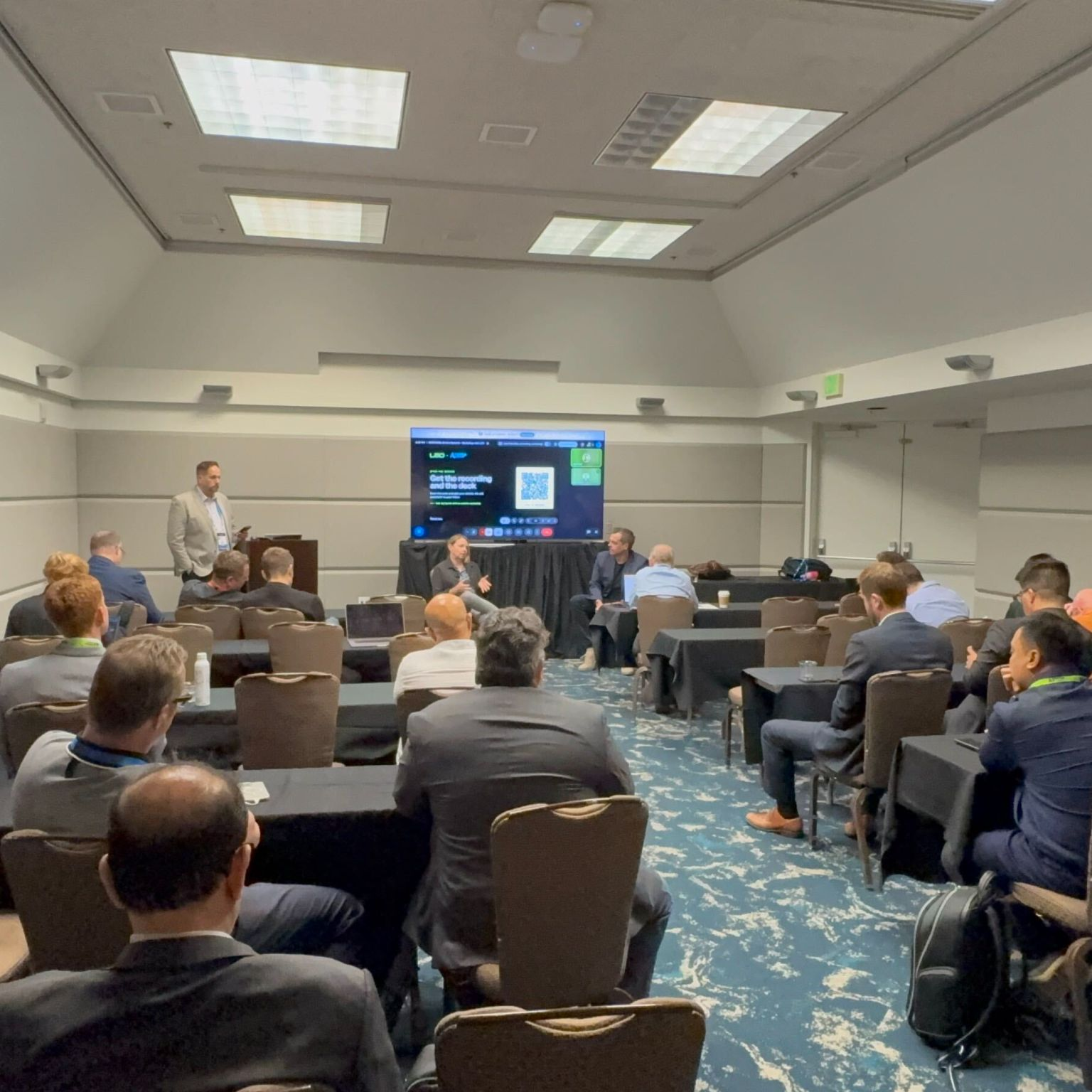
SAN FRANCISCO, California, September 28, 2026 The grid can make room for far more AI data centers if they commit to becoming flexible for a few dozen hours a year. The harder question for hyperscalers, colocation providers and utilities alike is how to deliver that flexibility with reliability, healthy SLAs and no surprises. LōD Technologies (LōD), an energy intelligence and compute flexibility company, today presented an innovative approach to data center flexibility it presented at AI Infra Summit in Santa Clara, California. The framework pairs each flexibility method with the compute workloads it best fits. For AI inference in particular, it points to workload shifting across distributed compute, which reduces grid stress at a constrained site while preserving the service.
The prize is speed to power. Duke University's Nicholas Institute estimated that existing U.S. power systems could absorb 76 GW of new load if that load can be curtailed 0.25% of the time, and 126 GW at 1% (Duke). The open question is what that flexibility costs operators, and which workloads can offer it without putting SLAs at risk.
LōD CEO and Co-founder Medi Naseri, Ph.D., presented the framework on September 15 in a session LōD convened with Astrid Atkinson, CEO and co-founder of Camus Energy, and Hans Royal, founder of Compute Heat Rate. The three approached one problem from different angles: what the grid needs, what the flexibility is worth, and how data centers can deliver it.
The grid view
Utilities size connections for the worst hour of the worst day, which leaves unused power most of the time. In a Google-backed planning study at a major PJM transmission operator, Camus Energy found flexible interconnection could cut timelines for large loads by up to five years and connect sites with up to three times more demand, with flexible sites fully grid-powered for all but roughly 30 to 70 constrained hours a year.
The economics
Compute Heat Rate's CHR Index puts the long-run value of AI compute at about $5,630 per megawatt-hour in Q3 2026, compared with roughly $90 for U.S. industrial power. In an illustrative case, a 100 MW facility that stops computing for 40 hours a year forfeits about $11 million if it runs commodity models and about $74 million if it runs frontier inference. The point is not that curtailment is wrong. It is that the right method depends on the workload.
The mechanics
LōD compared four methods: switching the power source between batteries and onsite generation, throttling or deferring workloads, routing workloads across locations through distributed compute, and virtual power plants. Each has a place. Facility-level methods work for any workload, training suits deferral, and general-purpose computing can be throttled. For inference, which Deloitte forecasts will make up about two-thirds of AI compute in 2026, workload shifting keeps service capacity intact while reducing load at a constrained site. LōD shifts inference requests between sites based on SLA health and grid conditions.
The framework in brief
- Match the method to the workload. Training and lower-value tasks can pause or run later. High-value inference should keep running.
- For inference, shift workloads across sites. Load balancing across distributed compute changes what the grid sees at a constrained site without changing what customers experience.
- Make flexibility predictable. Utilities need notice, duration and depth they can plan around. Operators need to know what each workload is worth. No surprises on either side.
> "Speed to power is what every operator we talk to is chasing, and flexibility is how they get there faster," said Medi Naseri, CEO and co-founder of LōD. "But flexibility only works if it comes with reliability and no surprises, for the grid and for the customer. For inference, distributed compute and workload shifting let operators load balance across sites based on SLA health and grid conditions. The best flexibility does not affect what customer experiences."
> "Utilities plan for the worst case, so most of the time there is power available that no one can use," said Astrid Atkinson, CEO and co-founder of Camus Energy. "Flexible interconnection puts that capacity to work years sooner without compromising reliability. The question is no longer whether data centers can be flexible. It's how, and what it's worth."
> "To the grid, a megawatt is a megawatt. To the compute behind the meter, it obviously isn't," said Hans Royal, founder of Compute Heat Rate. "Knowing what each workload is worth is what turns flexibility from a promise into something you can properly price and contract."
Through grid-responsive AI inference workload balancing, LōD will launch a pilot program for this solution alongside Dominion Energy in Ashland, Virginia, beginning this fall.
> "Batteries, workload deferral and virtual power plants all have a role, and the industry will need every one of them," Naseri added. "What distributed compute adds is spatial flexibility: load balancing inference across locations as grid conditions change, while keeping SLAs healthy. That is the layer we are building."
The session recording and slides are available at lod.io/lp/ai-infra-summit-workshop. The CHR Index is published at computeheatrate.com, and Camus Energy's FlexConnect study is at camus.energy/flexconnect.
About LōD Technologies
LōD Technologies, Inc. builds software that helps large energy loads respond to grid conditions. Its Flexible Compute platform load balances AI inference across distributed data center sites based on SLA health, grid conditions and power availability. LōD manages 500+ MW of curtailable mining and data center load in live ERCOT markets and is a member of NVIDIA Inception and the Google for Startups: AI for Energy incubator program. Learn more at lod.io.