ERCOT Demand Response Programs: An Operator's Guide
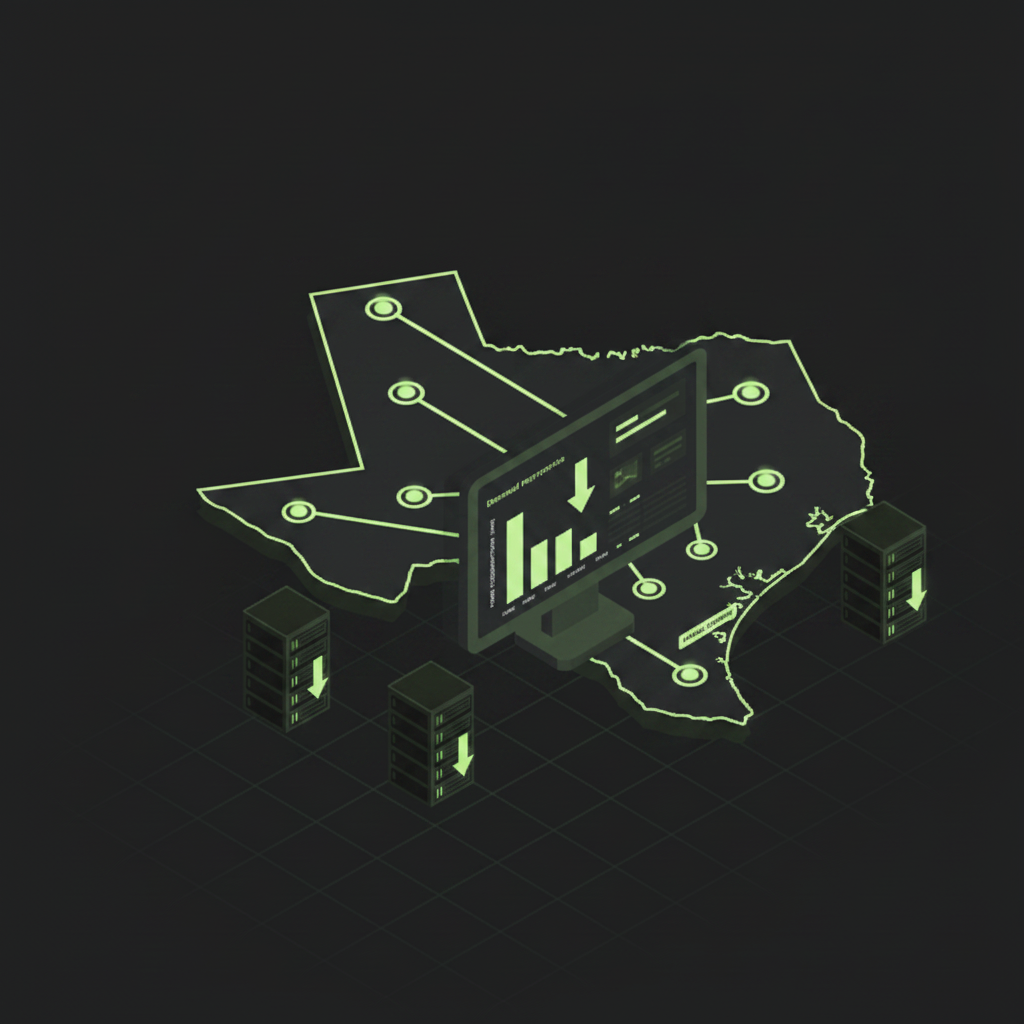
ERCOT pays flexible loads to reduce consumption when the grid is stressed. Through 4CP avoidance, ECRS, ERS, and other programs, a data center with automated curtailment can capture six figures per MW per year in combined savings and revenue. Inflexible loads pay full price during scarcity events and miss every dollar of program revenue.
TL;DR
TL;DR: ERCOT runs multiple programs that pay or reward flexible loads. 4CP avoidance reduces transmission charges for the next year. ECRS pays for capacity that responds within 10 minutes to contingency events. ERS pays for emergency reductions. A flexible 100 MW data center participating in 4CP plus one or two DR programs can capture seven figures in annual savings and revenue. The catch: every program requires real-time response and verifiable performance. Manual operations cannot reliably participate.
What is demand response in ERCOT?
Demand response is when a load reduces or shifts consumption in response to a grid signal. ERCOT uses DR for two reasons. First, to manage scarcity events when generation is short. Second, to incentivize flexible loads to shape demand around grid conditions, lowering overall system costs. Loads that participate are paid or earn savings. Loads that do not participate cover the cost in their bills.
What are the main ERCOT programs for data centers?
Four programs matter most for data center operators.
4CP (Four Coincident Peak). Not technically a DR program, but the highest-value capacity reduction lever in ERCOT. Your transmission charges for the next year are set by your demand during the four 15-minute peak intervals across June, July, August, and September. Reduce demand during those four intervals and your transmission charges drop materially. Read more on the ERCOT West load zone to understand peak patterns.
ECRS (ERCOT Contingency Reserve Service). Loads or generators that can respond within 10 minutes to a contingency event. Pays continuously for being available, plus performance during called events. Active since 2023, growing in scale.
ERS (Emergency Response Service). Loads paid to be available for emergency curtailment during grid stress. Two-product structure (10-minute and 30-minute response). Bid in seasonal procurements.
Real-time scarcity avoidance. Not a program per se, but functionally similar. ERCOT prices spike during scarcity (up to the $5,000 per MWh cap plus ORDC adders). A load that curtails during scarcity intervals avoids those costs.
How much can a data center make from these programs?
Combined revenue depends on size, location, and how flexibly the load can operate. Approximate ranges for a 100 MW data center in ERCOT:
- 4CP avoidance: $50,000 to $150,000 per MW per year, depending on the year's transmission charge rates.
- ECRS participation: $30,000 to $80,000 per MW per year, depending on cleared prices.
- ERS participation: $5,000 to $20,000 per MW per year, depending on hours bid and called.
- Scarcity avoidance: $5,000 to $50,000 per MW per year in event-driven savings.
A flexible operation can stack 4CP plus one or two of the other programs. Total combined value can exceed $100,000 per MW per year in good years, less in mild years.
What does it take to participate?
Three things. First, the right contract structure with a REP and QSE that allow you to nominate into ERCOT programs. Second, automation that can curtail in seconds. Manual operators miss most of the windows. Third, verifiable performance. ERCOT validates that you actually curtailed when called. Underperformance means lost revenue and potential penalties.
What is 4CP and why does it matter most?
4CP is the four 15-minute intervals across June, July, August, and September with the highest ERCOT system-wide demand. Your demand during those four intervals sets your transmission charges for the entire next year. ERCOT does not announce 4CP intervals in advance. They are determined retroactively from settlement data. You have to predict when peak intervals are likely to occur and curtail through them, every time, all summer. Most operators that try 4CP manually miss at least one of the four intervals. Operators with automated systems based on live load forecasts and weather data catch all four reliably.
What about ECRS?
ECRS launched in mid-2023 as a new ancillary service product. It pays for fast-responding capacity available within 10 minutes. ECRS quickly became one of the highest-revenue programs in ERCOT for flexible loads. You bid available curtailment capacity into ERCOT through your QSE. If cleared, you receive a continuous capacity payment. If ERCOT calls a contingency event, you have 10 minutes to curtail to your committed level. Performance is monitored and validated through real-time telemetry.
What are the risks?
Three to manage. Performance risk: if you commit to a DR program and fail to perform, you lose revenue and may face penalties. Workload disruption: curtailing for DR means stopping or slowing your primary workload. Match the program to the workload. Market risk: program prices change year to year. Plan around current market conditions, not last year's.
How does LōD help with ERCOT DR participation?
We give operators automated 4CP forecasting and curtailment, ECRS bid management, real-time scarcity response, and execution that responds in under 30 seconds. The platform tracks ERCOT load forecasts, real-time prices, weather, and program signals continuously. We also coordinate with the QSEs and REPs that handle program enrollment.
Wondering what your operation could have made from ERCOT DR programs last year if curtailment was automated? Request a demo. We will model your last 12 months of operations against an automated 4CP plus DR strategy and show you the gap.
Book Your Energy Strategy Call
30-minute conversation about your operation — no sales pitch.
Continue Your Journey
Understand the markets, mechanisms, and signals that determine your energy costs.